How ‘Bodyline’ Broke the Spirit of Cricket
When an establishment faces an existential threat to its dominance, it often turns to an uncompromising leader to chart a hardline, unapologetic course. Much like how modern geopolitical landscapes occasionally undergo stark, conservative shifts in leadership to unseat an incumbent power, the English cricketing establishment of the early 1930s appointed a ruthless tactician to reclaim their supremacy. The target of their strategy was not a political rival, but a 21-year-old country boy from New South Wales: Don Bradman.
The result was the 1932-33 “Bodyline” series, a sporting conflict so brutal and controversial that it nearly severed the diplomatic ties between Australia and the British Empire.
The Bradman Phenomenon The year was 1930, and the world was reeling from the Wall Street stock market crash. Amidst the fear and economic depression, Australia found hope in two sporting icons: the legendary racehorse Phar Lap, and a diminutive batsman from Bowral named Don Bradman.
During the 1930 tour of England, Bradman rewrote the record books, leaving the English upper class deeply offended by his sheer dominance. He scored a staggering 2,960 runs on the tour at an average of 98.67. In the Test matches alone, he amassed 974 runs at a phenomenal average of 139.14. This included a chanceless 254 at Lord’s, 232 at the Oval, and a record 334 at Leeds—where he famously scored 309 runs in a single day’s play.
The Marylebone Cricket Club (MCC) at Lord’s, the aristocratic custodians of the game, panicked. If Bradman’s run-scoring machine could not be dismantled, England might not win the Ashes for decades. They needed a weapon to bring the colonial prodigy down to size.
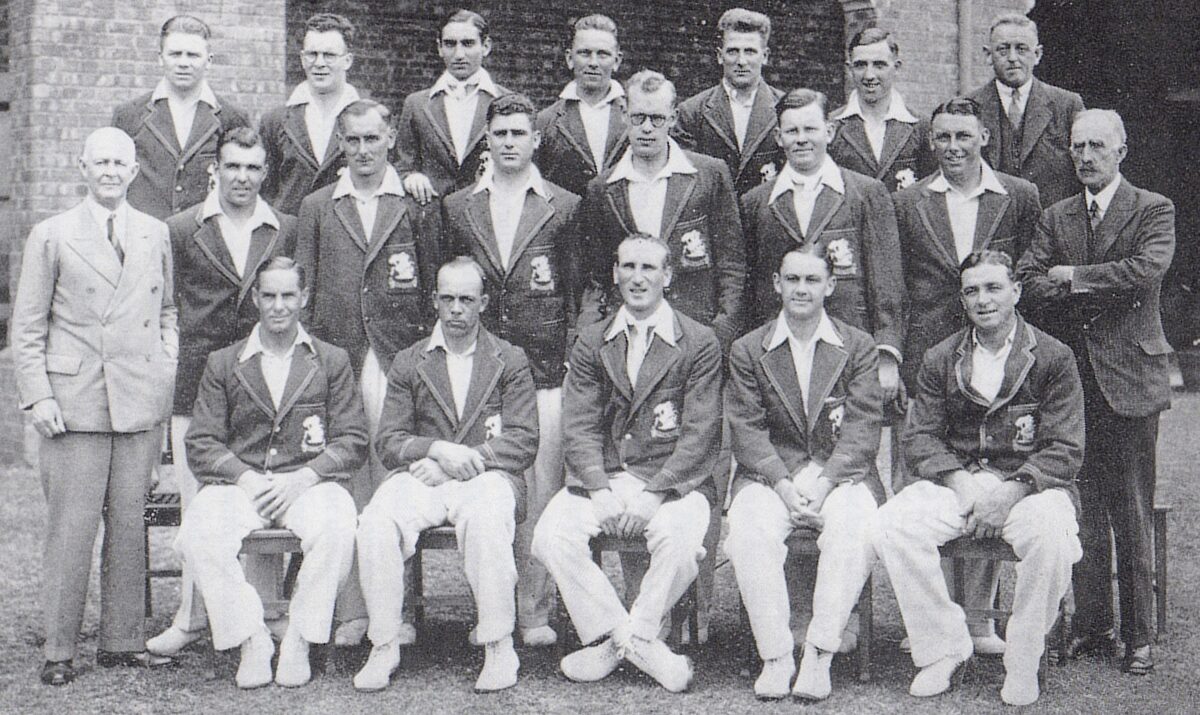
The Mastermind and the Miners To neutralize Bradman, the MCC appointed Douglas Robert Jardine as England’s captain. Born in India to a wealthy family and subjected to a spartan, elite education at Winchester College and Oxford, Jardine was an intense, aristocratic figure who viewed cricket as a battle. He allegedly declared that the only way to beat the Australians was to hate them.
Jardine devised a tactic originally known as “fast leg theory,” which the world would soon dub “Bodyline.” The strategy was simple but inherently dangerous: fast bowlers would consistently bowl short, rising deliveries aimed directly at the batsman’s body on the leg stump. If the batsman attempted to defend himself or hook the ball away, a trap of six fieldsmen waiting on the leg side would catch the deflection.
To execute this ruthless plan, Jardine relied on two fast bowlers from the coal mining villages of Nottinghamshire: Harold Larwood and Bill Voce. Larwood, capable of bowling at 90 miles per hour, was the tip of Jardine’s spear.
The Assault in Australia When the English team arrived in Australia for the 1932-33 series, the atmosphere was electric. The tension was palpable immediately. In the First Test in Sydney, Australian batsman Stan McCabe played one of the most courageous innings in history, hooking the flying cricket balls ferociously to score 187 not out. Despite his bravery, England won by 10 wickets.
Bradman, having missed the first match due to illness, returned for the Second Test at the Melbourne Cricket Ground in front of a record 64,000 fans. Shockingly, he was dismissed first ball for a duck. However, in the second innings, Bradman adapted, pulling the ball aggressively to score an unbeaten 103, leading Australia to a 111-run victory.
But the true crisis erupted during the Third Test in Adelaide—a city normally known for its tranquil, polite crowds.
The Adelaide Eruption On Friday the 13th of January 1933, the Bodyline tactic turned violent. Australian captain Bill Woodfull, a universally respected gentleman of the game, was struck a sickening blow over the heart by a Larwood delivery. He stumbled, white-faced and agonizingly hurt. In a deeply provocative move, Jardine loudly praised Larwood and immediately switched his fielders into the aggressive Bodyline trap for the very next ball.
The crowd of over 50,000 spectators nearly rioted. Mounted police were readied behind the pavilion, and English players later admitted they contemplated grabbing stumps to defend themselves in case the crowd stormed the pitch.
The horror escalated when Australian wicketkeeper Bert Oldfield was struck in the head by Larwood, fracturing his skull. When English manager Sir Pelham Warner visited the Australian dressing room to offer sympathies, Woodfull delivered a quote that has echoed through sporting history:
“There are two teams out there. One is playing cricket, the other is making no attempt to do so.”
A Diplomatic Crisis The Australian Board of Control sent a furious cable to the MCC, condemning the tactics as “unsportsmanlike” and a threat to the friendly relations between the nations. The MCC, sitting thousands of miles away in London and unable to see the visceral danger of the bowling, arrogantly dismissed the colonial complaints and threatened to cancel the tour.
The dispute escalated to the highest levels of government. Prime Ministers and diplomats scrambled to ease the tension, fearing that the cricket crisis could genuinely impact trade and loan repayments between Australia and the motherland.
The Aftermath England won the series 4-1, and Bodyline successfully muted Bradman, reducing his series average to a mere 56—a triumph for Jardine’s strategy, but a disaster for the spirit of the game.
The fallout, however, was bitter. To save face, the MCC eventually outlawed the tactic, rewriting the laws of cricket to restrict the number of fielders allowed behind square on the leg side and clamping down on intimidatory bowling.
Jardine, realizing the tide of history had turned against him, resigned shortly after. But the most tragic figure was Harold Larwood. The MCC hypocritically demanded the fast bowler apologize for executing the exact orders they had implicitly approved. Supported by his mother, Larwood steadfastly refused to sign the drafted apology. He never played for England again. Shunning his homeland, he emigrated to Australia in 1950, where the very crowds that once booed him welcomed him with open arms, recognizing that he had simply been a brave pawn in a ruthless aristocratic game.
Bodyline remains the most emotive word in cricket—a chilling reminder of what happens when the relentless pursuit of victory eclipses the very soul of sport.